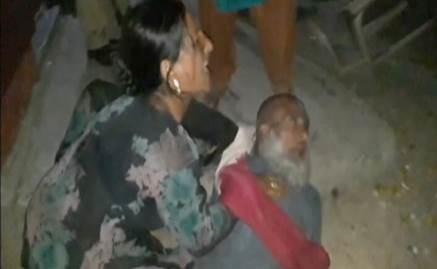
Trenches were dug to bury the dead cows lying around. (Picture for representation)
A government cattle shelter turned into a death trap for cows in Chhattisgarh. In yet another incident of neglect in cow shelters, allegedly over 200 cows died of starvation at a government-aided gaushala in Rajpur's Durg district.
The shocking incident has revealed blatant cruelty where the cows were left to starve with no fodder and water for 48 hours.
All fingers are pointing towards BJP leader Harish Verma, the moderator of this cow farm. Rajpur residents and state officials blame Verma for the deaths of the cows.
Accused of serious carelessness, Verma has now been arrested. Verma, who holds the post of vice-president in Jamul Municipality, has been booked under sections 4 and 6 of Chhattisgarh Agricultural Cattle Preservation Act 2004, under section 11 of Prevention of Cruelty to Animals Act 1960 and section 409 (criminal breach of trust) of the IPC, the IG said.
The leader has however, dusted off all allegations and claimed otherwise.
Speculations are rife that the cows were burried in many trenches in a bid to cover up the the severe incident of neglect.
Residents say they found trenches with 10 to 15 cows buried in each of them.
Rajpur's Sarpanch Pati Sevaram Sahu alleged that he found many trenches were being dug to bury the dead cows lying around, which made them suspicious.
Outrage however against the BJP leader hasn't yet cooled down with Opposition alleging that the shelters are facing neglect and the money to be spent on fodder being siphoned off
Many Hindus consider the cow to be a holy animal, and slaughter is
forbidden in most parts of Hindu-majority India. Since May 2015, a
violent vigilante campaign against beef consumption has led to the
killing of at least 10 Muslims, including a 12-year-old boy, in seven
separate incidents of mob violence. In July 2016, in Gujarat, vigilantes
stripped four Dalit men, tied them to a car, and beat them with sticks
and belts over suspicions of cow slaughter. In a number of cases, the
attackers have also robbed their victims of cash and cellphones, and
damaged their property.
“Self-appointed ‘cow protectors’ driven by irresponsible populism
are killing people and terrorizing minority communities,” said Meenakshi Ganguly,
South Asia director. “The government should condemn this violence and
take prompt action against those responsible for these attacks or face
allegations of complicity.”
The government should condemn this violence and take prompt action
against those responsible for these attacks or face allegations of
complicity.
Meenakshi Ganguly
South Asia Director
Since the BJP came to power in May 2014, extremist Hindu groups
supporting Modi and his party have led vigilante mob attacks across the
country to enforce “nationalism.” Senior BJP leaders, including elected
officials and leaders of various groups who claim to promote Hindu
rights, have instigated hate crimes. Self-appointed cow protectors are
increasingly conducting raids and attacks, claiming the police don’t
take adequate action against those slaughtering cows. There have been
numerous incidents in which they have allegedly assaulted, harassed,
threatened, and extorted money from Muslims and Dalits. Dalits,
so-called “untouchables,” are equally vulnerable as they traditionally
carry out jobs to dispose of cattle carcasses and skin them for
commercial purposes.
Among the largest cow protection networks is the Bharatiya Gau Raksha Dal
(“India Cow Protection Group”), an umbrella organization registered in
2012. Its leader, Pawan Pandit, told Human Rights Watch that the network
is affiliated with about 50 groups across the country and that their
10,000 volunteers have a presence in nearly every state. “Now the entire
India is a cow protection group because people are angered by such
cruelty to animals,” Pandit said, adding that even the BJP government
was not strong enough on cow protection. He denied allegations of
violence by his members, saying those were spontaneous acts by local
residents angered by the ill-treatment and slaughter of cows.
“The mild admonitions from BJP leaders when Muslims and Dalits are
lynched over cows sends a message that the BJP supports this violence,”
Ganguly said. “Instead of a government that took office on the promise
of universal development, it now appears to be one unwilling to protect
those most vulnerable.”
Recent ‘Cow Protection’ Cases and Concerns Government Silence and Denial
On April 1, 2017, a mob in the northwestern state of Rajasthan
brutally assaulted a 55-year-old dairy farmer, Pehlu Khan, and four
others with sticks and belts. Khan died two days later from his
injuries. Three of the six accused have been arrested. The state’s
BJP-led government did not condemn the killing, and its minister for
parliamentary affairs denied that the attack occurred. Rajasthan’s home
minister sought to defend the so-called cow protectors by blaming the
victims: “People know cow trafficking is illegal, but they do it. Gau bhakts [Cow worshippers] try to stop them. There’s nothing wrong with that but it’s a crime to take the law in their hands.”
Instead of filing a complaint against the attackers, the police
first registered a complaint against Khan and the other victims under
the Rajasthan Bovine Animal (Prohibition of Slaughter and Regulation of
Temporary Migration or Export) Act, 1995, for exporting cattle and
showing cruelty to the animals, which carries a maximum penalty of five
years in prison. The police waited two hours before filing a complaint
against the unidentified mob. Khan’s son alleged that the police filed
the case against the family even though they had receipts showing that
they purchased the cattle legitimately in Rajasthan. Mohammed Yusuf, the
brother of one of those injured in the attack, told Human Rights Watch
that the attackers also stole 35,000 rupees (US$540) his brother was
carrying, his cellphone, and three cows worth 75,000 rupees (US$1,150).
He no longer wants to be part of the dairy business. “We have decided
that we are not going to have anything more to do with cattle,” he said.
“If we can’t keep milk cows, if we now need permission to drink milk,
why should we keep cows?”
On April 23, several former civil service officers wrote
to the state’s chief minister demanding that all the accused members of
the mob be immediately arrested, saying that failure to take prompt
action would be a “mockery of good governance, causing minorities to
lose faith in the government’s ability to protect their rights.” Two
days later, the chief minister finally broke her silence and said, “such
activities won’t be tolerated in Rajasthan.” States Prompting Cow Protections
Even as BJP leaders failed to condemn attacks on Muslims and other
minorities, they have announced new policies for cow welfare and made
strong statements about the need to protect cows. Their policies and
statements have facilitated abuses by cow protection groups in BJP-ruled
states of Rajasthan, Haryana, Uttar Pradesh, Jharkhand, Gujarat, Madhya
Pradesh, and Chhattisgarh.
In March 2017, the Gujarat government made slaughtering a cow
punishable by life in prison. In Chhattisgarh, the BJP chief minister
said, “We will hang those who kill cows.” In 2016, the Haryana
government decided to give licenses to some cow protection groups to
help the police keep a check on alleged cow smuggling. Group members are
often seen patrolling the streets, especially highways, at night,
stopping vehicles, checking them for cattle, intimidating drivers, and
reacting with violence if they find cows. These vigilantes have also
physically assaulted legitimate cattle transporters even when they are
transporting other animals, such as buffaloes.
There have been reports in the media of cow protectors allegedly assaulting Muslim men and women in trains and railway stations in Madhya Pradesh, stripping and beating Dalit men in Gujarat, force feeding cow dung and urine to two men in Haryana, raiding a Muslim hotel in Jaipur, aiding police in checking roadside food stalls and restaurants for beef in Haryana ahead of the Muslim festival of Eid, and an alleged gang rape and murder in Haryana of people the attackers claimed were eating beef at home.
The Haryana government has set up a 24-hour helpline
for citizens to report cow slaughter and smuggling and appointed police
task forces to respond to the complaints. Rajasthan’s government has
had a dedicated department for ensuring the welfare of cows since 2013.
In April 2017, the state government imposed additional taxes for
“conservation and propagation of cow and its progeny.”
Soon after the BJP appointed Adityanath, a Hindu cleric, as chief
minister of India’s largest state of Uttar Pradesh in March, he cracked
down on slaughterhouses and meat shops, mostly run by Muslims. He
contended that he was shutting down illegal establishments, but the
businesses said they were forced to close without notice or due process.
Cow protectors and members of an extremist Hindu group, Hindu Yuva
Vahini, founded by Adityanath in 2002, aided the police in some of these
operations.
Several members of the group, including Adityanath, face criminal
charges for inciting violence, attempt to murder, rioting, carrying
deadly weapons, and promoting enmity between two religious groups. The
group has used violence, threats, and intimidation to shut down meat
businesses, news reports
say. But the state’s deputy chief minister and BJP state party
president told Reuters that members of Adityanath’s organization were
acting as responsible citizens and rejected allegations that they were
acting “as a parallel administration.”
The authorities have largely ignored the young men roaming streets
and beating up Muslims and Dalits in the name of protecting cows, and
have targeted instead the peaceful critics of such actions. At least
seven people – including a poet, a filmmaker, and a student – have been
booked on criminal charges for criticizing Adityanath on social media.
The charges range from hurting the religious sentiments of a community
to promoting enmity between groups.
On April 22, members of the Bajrang Dal and Vishwa Hindu Parishad,
groups affiliated with the BJP, attacked two police stations in Uttar
Pradesh to protest the arrest of their colleagues for allegedly beating
up and robbing a Muslim man. The police said that the men, from Bajrang
Dal and Vishwa Hindu Parishad, threw stones at the police stations, beat
up a policeman, set fire to his motorcycle, and took his service
revolver. A senior police officer told the media that men from Hindu Yuva Vahini were also part of the mob that attacked the stations. Inadequate Response to Killings over Cows
Prior to Pehlu Khan’s murder on April 1, at least nine other people
were fatally beaten or lynched by Hindu mobs over suspicions that they
were trading or killing cows for beef. Rajasthan, May 2015
Abdul Ghaffar Qureshi, 60, who ran a meat shop in Birloka village in
Nagaur district, was beaten brutally by a mob with sticks and iron rods
on May 30, 2015. He died the following day. The mob also vandalized his
home and shop. Two years after the incident, the police have filed
murder charges against three accused in the attack, while six are yet to
be arrested. The case is pending in court. Uttar Pradesh, August 2015
A mob beat to death three men suspected of being cattle thieves –
Anaf, Arif, and Nazim – in the Kaimrala village of Dadri town on August
2, 2015. The mob also set their truck on fire after they found two
buffaloes in it. A farmer who witnessed the incident told Frontline
magazine that the police arrived after the men were already dead. He
said, “When a cow is killed, passions get ignited and these things can
happen.”
The police filed a case against the dead men for theft, trespass,
and attempted murder, alleging that they opened fire first. The
superintendent of police did not respond to questions from Human Rights
Watch about whether there was any case against the villagers for killing
the men. Uttar Pradesh, September 2015
On September 28, 2015, a mob in Bishara village in Dadri town beat
to death Mohammad Akhlaq, 50, with bricks and critically injured his
22-year-old son. The attack came after an announcement at a nearby Hindu
temple that Akhlaq had slaughtered a calf. The police arrested six
people but also seized the meat from Akhlaq’s home and sent it for a
forensic exam to determine whether it was beef. The villagers protested
the arrests by damaging vehicles, including a police van, and setting a
motorcycle on fire.
The Uttar Pradesh government, then led by the Samajwadi party,
announced compensation of 10 lakh rupees (US$15,500) to Akhlaq’s family
and the chief minister ordered district officials and police to provide
full protection to his family. However, a senior BJP leader and minister
in the central government called Akhlaq’s killing an “accident.”
Another BJP legislator from the state, Sangeet Som, already facing
charges for allegedly inciting communal riots, visited Dadri following
Akhlaq’s killing to show solidarity with the accused, one of whom is the
son of a local BJP leader. Som did not condemn Akhlaq’s murder and
instead criticized the state government for not taking legal action
against Akhlaq’s family. In Haryana, the neighboring state, the chief
minister, from BJP, called Akhlaq’s killing a “simple misunderstanding”
and said, “Muslims can continue to live in this country, but they will
have to give up eating beef.”
In December 2015, the Uttar Pradesh police filed charges against 18
people. Nearly a score of hearings have been held since then, but there
has been little progress in the case. Meanwhile, Akhlaq’s family
relocated to Delhi because of concerns for their safety. Jammu and Kashmir, October 2015
On October 9, 2015, a right-wing Hindu mob in Udhampur district of
Jammu and Kashmir allegedly threw gasoline bombs at a truck driven by
Zahid Bhat, an 18-year-old trucker, because they suspected him – wrongly
– of transporting beef. He died of his injuries at a hospital 10 days
later. Two others traveling with him were also injured. Bhat was found
to be transporting coal in his truck.
His death led to violent clashes between protesters and security
forces in a south Kashmir village where he had lived. The state’s chief
minister, Mufti Mohammad Sayeed of the People’s Democratic Party,
condemned the killing and announced compensation but the family refused to accept any money, saying they wanted justice.
Five people were arrested for murder, rioting, conspiracy, and use of explosives. Himachal Pradesh, October 2015
A Hindu mob at Sarahan, a village near Simla, allegedly beat to
death Noman, 22, a resident of Uttar Pradesh, on October 14, 2015, over
suspicions that he was smuggling cows. The mob also beat up four other
occupants of the truck. Police immediately arrested the four occupants,
booking them under laws banning cow slaughter and preventing cruelty to
animals.
Later, police also registered a case of murder and said they would
investigate whether members of Hindu militant group Bajrang Dal were
behind the attack. Jharkhand, March 2016
A Muslim cattle trader, Mohammed Mazlum Ansari, 35, and a 12-year-old boy, Mohammed Imteyaz Khan, were found hanging
from a tree in Jharkhand on March 18, 2016. Their hands were tied
behind their backs and their bodies bore signs of mistreatment. The
police arrested eight men, including a couple linked to a local cow
protection group. The case is still pending in court.
Ansari’s brother, who runs a small shop in the village, told Human
Rights Watch he had already spent 200,000 rupees (US$3,100) on the case
and was determined to see it to the end but was not hopeful. “I don’t
think we will receive justice,” he said. “The government is theirs. They
are rich, they are powerful, the police is also theirs.”
ON PATROL: A group of cow vigilantes prepare
to set up a roadblock, accompanied by police, near the northern Indian
city of Chandigarh in early July. REUTERS/Cathal McNaughton
Hindu
nationalists are beating up Muslim farmers and seizing their cows on
the grounds that the animals are headed for the slaughterhouse. But
there's another side to the religiously tinged violence: The stolen cows
are being given to Hindu farmers.
BEHROR, India – The
beating that ended Pehlu Khan’s life was televised nationwide. Cell
phone video captured a group of men punching and slinging Khan around
the middle of a road in north India, stomping on him and then slamming
the 55-year-old farmer down on concrete as he begged for mercy.
Khan
had been stopped by the lynch mob of right-wing Hindus as he rode home
from a market in April with two cows and two calves in the back of a
truck. The crowd was furious at the sight of a Muslim transporting
animals held sacred by Hindus, according to the accounts of his sons and
two fellow villagers who were also attacked. Before the men beat Khan
so badly that he later died, breaking his ribs in multiple places, they
screamed that he was planning to slaughter the cattle for beef.
Outside
the frame of the video, something else was happening: Pehlu Khan’s cows
were seized. They were hauled off to a nearby Hindu-run shelter that
takes in cattle snatched from Muslims and sells them.
Assaults
meted out in broad daylight against India’s Muslim population, some 14
percent of the country’s 1.3 billion people, have sparked concern about
the direction the country is taking under Hindu nationalist Prime
Minister Narendra Modi. There has been another, less noted dimension to
the violence: The theft from Muslims and redistribution to Hindus of
cows that provide crucial income in the Indian countryside.
Such scenes
clash with India’s image as an investor darling in Asia and the
pro-business message Modi broadcasts to foreign investors. But three and
a half years after his electoral victory, the cow seizures illustrate
how the nation’s right-wing Hindu factions that propelled Modi to power
are now shaping India and stirring religious upheaval.
Having
stoked Hindu nationalist passions in his bid for the highest office,
it’s unclear to what extent Modi can now control them. The bands of
right-wing Hindus who seize the cows are operating essentially as
private militias. They are undeterred by the prime minister’s public
calls on them to end the violence. States governed by Modi’s party have
seen a marked increase in cow theft from Muslims as well as funding for
cow shelters that in many cases take in the stolen cattle.
Interviews
with nationalist Hindu leaders and militia members across the country
reveal an impatience for Muslims to demonstrate obeisance to the Hindu
majority.
There are no
official statistics for how many cows have been stolen from Muslims in
incidents involving such groups since Modi’s Bharatiya Janata Party
(BJP) came to national power in 2014. Reuters’ reporting across India,
though, puts actual numbers on the extent of the cow theft. It also
provides the first in-depth look at how the actions of cow vigilantes
are leading to further economic marginalization of the country’s Muslim
minority.
In northern
India, the leadership of just two of the main organizations of “gau
rakshaks” – right-wing Hindu cow vigilantes, or literally “cow
protectors” – said they have taken about 190,000 cows since the year of
Modi’s election, some in the presence of police and almost every single
one of them from Muslims, the reporting shows.
RURAL TERROR:
Irshad Khan, 24, holds a picture of his father Pehlu, who was beaten to
death by a mob of Hindu vigilantes in April when transporting cattle
back to his home in the village of Jaisinghpur. REUTERS/Cathal
McNaughton
“Everyone in this world is born Hindu. They are
turned into Muslims when they are circumcised and Christians when they
are baptized.”
Separately,
Reuters surveyed 110 cow shelters or farms, known as “gaushalas,”
across six Indian states that were led by BJP chief ministers from
before or just after Modi’s 2014 election win. The survey found an
increase of 50 percent in their cattle holdings - from about 84,000 head
before Modi came to power in 2014 to more than 126,000 today.
The survey, conducted by phone and in person, covered a fraction of the thousands of cow sheds nationwide.
It
was not possible to determine how much of the 50 percent increase was
due to cow vigilantes, because record-keeping in many cases is
non-existent. But of the 110 cattle facilities surveyed, all but 14 said
they receive cows from the Hindu vigilante groups. About a third said
they sell or give cows away, nearly all to Hindu farmers and households.
In
a separate survey, Reuters found that only three of 24 cow facilities
in four states not ruled by a BJP chief minister said they sold or gave
away cattle - mainly to Hindus - after receiving them. While cattle
stock has risen about 40 percent in these gaushalas since Modi took
office, only a small part of the increase was due to vigilantes. In many
of the cases, cows were donated to the shelters for religious reasons
or purchased from cattle markets for fear they would be slaughtered.
It
is hard to put a value on the seized cattle because the price of cows
ranges from zero for animals near death to 25,000 rupees (about $385),
if not more, at cattle markets for healthy milk cows. But taking the
average of those two points, just the 190,000 cows captured by the two
vigilante groups in northern India would be worth more than $36 million.
That is a significant amount of money in India, where some 270 million
people live on less than $1.90 a day. In rural areas, home to about 70
percent of the nation’s population, a family’s milk cow is often its
most valuable possession.
Cow
slaughter is illegal in most of India, while committing cruelty to
cattle by transporting them crammed into small spaces is outlawed across
the country. Slaughtering buffalo, an animal not considered holy, is
allowed, fueling a multi-billion dollar meat export industry that is
dominated by Muslims. Penalties for killing a cow differ from state to
state, with most ranging from six months to five years in prison.
The
fatal assault on Pehlu Khan unfolded among the rolling hills of India’s
northwestern Rajasthan state. Travelling with his two adult sons in a
rented truck, Khan was headed home to the village of Jaisinghpur in the
neighboring state of Haryana. He’d borrowed 40,000 rupees (about $620)
to add to cash he’d cobbled together to buy the cows.
His
four animals were among 32 other cattle seized on April 1 at makeshift
roadblocks near the town of Behror. A day after the attack on Khan and
his two sons, police began an investigation against them under a state
law barring cow slaughter. On April 3, Khan died.
SURVIVOR: When
his father was attacked, Irshad Khan (left) was also beaten by Hindu men
who accused them of transporting cows for slaughter. Irshad, who
survived, said the animals were dairy cows. REUTERS/Cathal McNaughton
“If the sentiments of the majority community
are respected, there would be no such incidents. Can we demand pork in
any Gulf country?”
In its
April 18 order following a bail hearing for the sons, a local court
noted that the Khan family, found lying injured on the ground, was
unable to produce a waybill showing they’d legally purchased the
animals. Also, the cows were bound together at the mouth and, the judge
noted, “our society does not allow animals to be treated in an inhumane
way.”
Khan’s elder
son, Irshad, told Reuters that the cows had not been tied together. The
receipt they got at the cattle fair where they bought the animals, he
said, was snatched by the mob at the start of the violence. The family
handed Reuters a copy of the bill that they later retrieved.
A
Reuters reporter showed the receipt to clerks and a local official from
the office that issues the documents near the fair, in the city of
Jaipur. They said the document was authentic and should have ensured
safe passage.
The men
who delivered the cattle to the local cow shed, with the help of police
who rounded up the cows at the scene of the attack, were members of
right-wing Hindu organizations, according to the manager of the
facility. Survivors said the lynch mob let the driver of the truck, a
Hindu, escape.
The
shed often receives cattle “taken from Muslims” by Hindu vigilante
groups who suspect they’ll use the animals for meat, according to Vijay
Singh, its manager. Singh said he sells the best cows to local Hindu
farmers and landowners.
Speaking of the men who took the animals from Khan, Singh said they had performed “an act of devotion.”
The
cattle shelters range from tiny pastures to large complexes. They have
traditionally operated as religiously-motivated charities, taking in
cows abandoned by farmers because they no longer produce milk or those
dropped off by local government workers who found them wandering the
streets.
DEAF EARS: Indian
Prime Minister Narendra Modi has publicly criticized cow vigilantism,
but his calls have not been heeded by some of his most ardent
supporters. REUTERS/Amit Dave
People
involved in snatching cattle from Muslims speak with a triumphant sense
that their moment in history has arrived. “Everyone in this world is
born Hindu. They are turned into Muslims when they are circumcised and
Christians when they are baptized,” said Dinesh Patil, a district head
of the Bajrang Dal group in the southwestern state of Maharashtra.
The
Bajrang Dal organization is closely linked to the Rashtriya Swayamsevak
Sangh (RSS), the nation’s umbrella right-wing Hindu organization. The
RSS argues the purity of India was soiled by the foreign intervention of
Muslims and then Christians beginning in the 8th century. The RSS
helped create Modi’s political party, and the prime minister himself
first attended the group’s meetings as a child.
At
the complex he manages, Patil said that almost every one of the 1,700
cows grazing outside was “rescued by the Bajrang Dal” from “these Muslim
slaughterers.” Patil described how a degree of law enforcement
sanction is conferred on the cattle seizures: His group takes the cows
and hands them over to the police, who then deliver the cattle to his
facility. “The entire investigation and catching of the culprits is done
by us,” Patil said.
The police, he added, “have to listen to us because the BJP is in power.”
Told
of Patil’s comments, Bipin Bihari, second-in-command of police for
Maharashtra, said: “In a way their work supports the police. It eases
our work. If they have some information on some illegal activities, they
can share it with us, and we act on it. But they are not allowed to
take the law into their hands.”
LYNCH VICTIM:
Mohammed Rafiq, 25, who was beaten by cow vigilantes in the attack that
killed Pehlu Khan, recovers at his home in Jaisinghpur in early June.
REUTERS/Cathal McNaughton
A national spokesman for the ruling BJP, Sudhanshu Trivedi, said his
party expects anyone with knowledge of illegal acts, such as cow
slaughter, to inform the police. In cases where cows were taken, he
added, it was because their owners had broken laws: “It is not
redistribution of wealth. It is just stopping of illegal activities,” he
said.
Modi's office
referred Reuters’ request for comment to the Home Ministry. The ministry
said it is "not correct" that cow vigilantism has risen on Modi's watch
and "preposterous" to conclude that Hindus are organizing to confiscate
and redistribute cattle. Some people have taken the law into their own
hands “in the name of protecting the cows,” the ministry noted in a
written statement, but "the Government is committed to protect the legal
rights of all citizens, including minorities in India." State
governments, it said, have been directed to take “prompt action” against
such people.
Reuters
found no evidence of a formal plan by the BJP to use cow vigilante
groups to engineer the seizure and transfer of cows from Muslims to
Hindus.
But in states
where the BJP has taken power, cow seizures have ramped up. In the
absence of official data on the number of cows taken, Reuters reporting
and a review of past incidents show that the largest vigilante groups
and the cattle seizures are concentrated in BJP-led states.
One
organization of cow vigilantes in the northern state of Haryana has a
golden cow with crossed swords and two AK-47s beneath it as its logo.
The leaders of the Gau Raksha Dal, or cow protection group, say they
have captured up to 120,000 across the country since beginning their
campaign in 2013. Most of that activity was carried out after Modi’s
victory in 2014, which was followed by a BJP chief minister taking
office in Haryana later in the year.
GUNS, SWORDS AND COWS: The logo on a website of the Gau Raksha Dal, a cow protection group.
Dinesh Arya,
state head of the Gau Raksha Dal, acknowledged his group is breaking
the law. Arya produced a list of 27 criminal complaints lodged by cattle
traders against his members that he said were still pending. “Seizing
cattle is not legal and we know that well. We are not authorized to do
this, it’s the police department’s work,” Arya said.
But
he claims a higher calling: “Our religion has given us the right to
stop our mother being butchered,” he said, referring to “gau mata,” or
mother cow. “We have forcefully taken that right.”
Outside
his office, a truck converted into a “mobile cow ambulance” used to
transport seized cattle bore a bullet hole – the aftermath of a recent
gun battle with Muslim “cattle smugglers,” Arya said.
Modi
has at least twice publicly criticized cow vigilantism. “Do we get the
right to kill a human being in the name of cow? Is this ‘gau bhakti’? Is
this ‘gau raksha’?” he declared in a speech in June, using the Hindi
phrases for cow devotion and cow protection. “Violence is not the
solution to any problem,” he added.
The
Supreme Court has also addressed the issue. In September, the court
ruled that central and state governments must deploy police officers to
prevent cow vigilante violence.
On
the ground, some Hindu activists aren’t heeding Modi’s calls. The
leader of a group of cow vigilantes, which claims 10,000 members
concentrated mostly in western and northern Indian states, said they
were unmoved by the prime minister’s condemnation of what he called the
vigilantes’ “anti-social activities.”
“The
cow protection movement totally belonged to the BJP before 2014,” said
the group’s leader, Pawan Pandit, a part-time software engineer. “Now
groups like ours have the momentum.”
SLIDESHOW: A member of
the Bhartiya Gau Raksha Dal cow vigilante group raises his arms to stop
a truck at a roadblock set up in the northern Indian city of Chandigarh
in early July. REUTERS/Cathal McNaughton
Pandit said networks of
vigilantes operating under his Bhartiya Gau Raksha Dal – or Indian cow
protection group – captured as many as 60,000 cows in the three years
before Modi came to office. Since 2014, Pandit said, the group has
grabbed more than 100,000 cows, often working with police.
A
similar scenario has unfolded in Assam, where the BJP won power last
year. Located in the farthest reaches of India’s northeast, the state is
in a region where cow vigilante activity was all but unheard of.
The
leader of a right-wing Hindu youth organization said he waited a year
for the BJP-led government in Assam to crack down on what his group
views as illegal cattle trading. Then, said Balen Baishya, head of the
Hindu Youth-Students Council of Assam, he decided that local party
leadership was not made up of “hardcore believers.”
On
July 2, Baishya said, he and his men seized three vehicles carrying
cows. Video of the incident posted to the Internet shows a mob
surrounding one of the drivers as a man beat him with a baton while he
writhed on the ground and tried to shield himself.
This
lawlessness extends beyond the 18 states Modi’s BJP now controls
directly or with coalition partners. In the southern state of
Telangana, one of 11 states where the BJP is not in power, a man named
Purushottam Gupta was arrested shortly after Modi gave a speech in
August last year condemning cow vigilantes. Gupta had refused a court
order to hand back 20 cattle seized by cow vigilantes and kept them with
some 5,000 other cows at a facility next to the ashram where he is the
de facto deputy head. Gupta said he was released the same day he was
arrested and that the cows have yet to be returned to their Muslim
owners.
India’s laws
against cow slaughter predate Modi’s administration, and cow vigilantes
were operating in India before Modi came to power. At the federal level,
the BJP’s predecessor, the relatively liberal Congress party, funded
the cow sheds via a federal animal welfare association at higher levels
than Modi. Spending from the association’s four main gaushala grants,
the primary source of federal funding for the facilities, was about 150
million rupees for the 2010-11 fiscal year, compared with some 58
million for 2015-16, the most recent period available.
CATTLE ROUNDUP:
Cows are packed into a gaushala, or cattle shelter, in the town of
Barsana that takes in cattle seized from Muslims by vigilantes in the
Indian state of Uttar Pradesh. REUTERS/Cathal McNaughton
But
at the state level, BJP politicians have in many cases sharply
increased funding for the cattle shed facilities through government
bodies. In Haryana, the state where Pehlu Khan lived, the Gau Seva
Aayog, or cow protection commission, went from allotting 18.5 million
rupees to cow sheds in the 2014-15 fiscal year, when a BJP chief
minister took over, to more than 37 million for 2016-17. In Rajasthan,
the state where Khan was killed, funding doubled from about one billion
rupees in 2013-14, as the BJP captured the state, to more than 2.3
billion rupees in 2016-17, according to a state official.
Officials
in two of the states surveyed by Reuters that are not governed by a BJP
chief minister, said the government provides no funding for gaushala
facilities. A third state does not make payments annually and a fourth,
Karnataka in the south, began increasing its grants because of droughts
that caused farmers to abandon their cows, increasing the burden on
gaushalas, according to the state’s animal husbandry department.
Police
completed their formal court charge sheet in May for Pehlu Khan’s
death, naming 15 alleged attackers as taking part in the killing. The
charge sheet included a statement Khan gave from the intensive care unit
at 11:50 p.m. on the night of the April 1 assault. He said of the men
who assaulted him: “They were calling themselves workers of the Vishwa
Hindu Parishad and Bajrang Dal” – both founded by members of the RSS,
the nationalist organization that Modi joined as a youngster.
Surendra
Jain, joint general secretary for the Vishwa Hindu Parishad, parent
organization of the Bajrang Dal, said that “not a single person from VHP
was involved” in the attack on Pehlu Khan. Asked whether he was
certain, Jain said: “I can’t say. We have not looked in detail into
these cases.”
“If the
sentiments of the majority community are respected, there would be no
such incidents,” said Jain. “Can we demand pork in any Gulf country?”
Manmohan
Vaidya, national spokesman for the RSS, said his group doesn’t “support
any act of violence or people taking the law into their hands.”
Another
senior RSS official, speaking on condition he not be named, was more
pointed: “Hindus never had the courage to stand up for their religion
and now they are standing up,” he said. “The cow issue has led to an
awakening.”
In
Jaisinghpur, the small, poor village that Pehlu Khan called home, his
name is still in a fat, red notebook listing loans given out to
villagers by a local dairy operation. Entries on the front and back of a
faded page for Khan reaching back to 2006 show that he borrowed money
and paid back the loans in milk.
Mohammed
Yunus, the 58-year-old patriarch of the Muslim family that runs the
dairy, shook his head. He said he had suggested to Pehlu Khan that he
make the trip that ended his life, the one to the city of Jaipur to buy
cows with his two adult sons. The cattle fair there has better milk cows
than the local markets, Yunus explained.
At
the district police station, the head constable took out his book of
criminal records for the village and searched for the names of Pehlu
Khan, the Yunus family, and others interviewed in the area. None of them
had been arrested for anything related to cow smuggling or slaughter,
according to the records. There were two notations for one of Pehlu
Khan’s sons when he was a teenager, one for being found with a dead cow
and the other for travelling with animals stuffed in a vehicle.
The
son, Irshad, said one case involved a buffalo that was later returned
by police, and the other was rooted in a dispute with a distant
relative.
In the weeks
after the murder of Pehlu Khan, a leader of a small opposition party
visited the family home to pay his respects. He gave the Khans something
to help pay back the 40,000 rupees they still owed the Yunus family
from the loan Pehlu Khan took – something to give Khan’s widow and
children hope.
It was a cow.
BYPRODUCT: A girl
shovels manure from cattle at a facility that receives cows seized by
vigilantes from Muslim farmers in the town of Barsana in Uttar Pradesh
state. REUTERS/Cathal McNaughton
Additional reporting by Mayank Bhardwaj, Mohi Narayan and Rupam Jain in New Delhi.
For
Hindus, the cow has long been holy. In ancient scriptures, it is
celebrated for its ability to nurture humanity and is compared to
deities.
During
Modi’s Hindu nationalist administration, the cow has taken on additional
political significance. In his campaign for office, Modi referred to
the danger of a “pink revolution” under the relatively liberal Congress
party, the domain of the Nehru-Gandhi dynasty.
It
was a play on Congress’ “green revolution,” under which agricultural
output increased, suggesting the party had allowed the production and
export of meat including beef to surge.
CAUGHT NAPPING: A man sleeps beside cattle in a cow shelter in the town of Barsana in northern India. REUTERS/Cathal McNaughton
Those in
hardline Hindu groups supporting Modi frequently complain that Congress
and its allies looked the other way when it came to illegal cow
slaughter operations run by Muslims to gain favor with that community at
the polls.
Two spokespeople for Congress did not respond to questions from Reuters.
In
May, Modi’s government banned the trade of cattle for slaughter. The
measure mostly affected the buffalo industry, as killing cows for meat
was already forbidden in most states. But the move was seen by many
Muslims as a ploy to further squeeze them out of the multibillion dollar
beef and leather industry, which employs millions in India.
India’s
Supreme Court in July suspended the government measure, effectively
lifting the ban on the trade of buffalo for slaughter.
Cash Cows
By Zeba Siddiqui, Krishna N. Das, Tommy Wilkes and Tom Lasseter
In India, where cows are venerated by a large segment of the population, cow vigilante violence involving mob attacks in the name of "cow protection," but targeting mostly Muslims, has swelled since 2014.[1][A][2][B][3][C] Cattle slaughter is banned in most states of India,[4] Recently emerged cow vigilante groups, claiming to be protecting cattle, have accused some Indian Muslims and Dalits
of cattle theft or slaughter, and targeted violence against them,
leading to a number of deaths. Cow-protection groups see themselves as
preventing theft, protecting the cow or upholding the law in an Indian
state which bans cow slaughter.
There has been a rise in the number of incidents of cow vigilantism since the election of the Bharatiya Janata Party
(BJP) to the Indian central government in 2014. The frequency and
severity of cow vigilante violence has been described as
"unprecedented".[5]Human Rights Watch has reported that there has been a surge in cow vigilante violence since 2015.[6] The surge is attributed to the recent rise in Hindu nationalism in India.[5][7] Many vigilante groups say they feel "empowered" by the victory of the Hindu nationalist BJP in the 2014 election.[8][9]
However, in a major setback for cow vigilantism, Supreme Court of India
in September 2017 ruled that each state should appoint a police officer
in each district as a nodal officer to take strict action against cow
vigilantism.[10]
The
BJP has run the Indian federal government since its election in 2014.
Following Narendra Modi's rise to power, extremist Hindu groups have led
attacks across the country that have targeted Muslim and Dalit
communities. These attacks have been carried out with the stated
intention of protecting cows.[11][12][13][6]
Dalit groups are particularly vulnerable to such attacks, as they are
frequently responsible for disposing cattle carcasses and skins.[6][14] The perpetrators of these attacks, described as "vigilantism" by Human Rights Watch, have stated that they are protecting the rights of Hindus, and that the police do not adequately deal with cow slaughter.[6][11]
Scholar Radha Sarkar has argued that "cow vigilantism itself is not new
in India, and violence over the protection of cows has occurred in the
past. However, the frequency, impunity, and flagrance of the current
instances of cow-related violence are unprecedented."[5] In 2015 Business Insider reported that vigilante attacks on trucks carrying cattle had increased in Maharastra.[15] In 2017, Bloomberg
reported that according to the meat industry representatives, cow
vigilantes have been stopping vehicles, extorting money and stealing
valuable livestock.[9] Cow vigilante activity also increased during the run up to Bihar Legislative Assembly election, 2015.[16] BJP leader Sushil Kumar Modi said the election was "a fight between those who eat beef and those who are against cow slaughter".[17][18]The Economist argued in 2016 that cow vigilantism can sometimes be a profitable business. It pointed to an Indian Express
investigation that found that vigilantes in Punjab charge cattle
transporters 200 rupees ($3) per cow in exchange for not harassing their
trucks.[19]
Analysing the reasons for the vigilantism, scholar Christophe Jaffrelot stated that since its formation, the RSS
has intended to transform society from within, by instilling its own
sense of discipline into it, which it thought was required for defending
Hindus more effectively. He also said that the Hindu nationalists, who
claim to represent society at large, do not want the state to prevail
over society, and want the society to regulate itself, as per the
emphasis on social order and “harmony” or hierarchy, that is suggested
in the Hindutva
ideology. According to him, this Hindu nationalist approach gives the
act of policing a greater legitimacy and it is clearly synonymous with
the populist behaviour, since for the populist leader, the people and
their will prevail over the rule of law and public institutions.[20] Jaffrelot further remarks:[20]
"The fact that the vigilantes “do the job” is very convenient for the
rulers . The state is not guilty of violence since this violence is
allegedly spontaneous and if the followers of Hinduism are taking the
law into their hands, it is for a good reason — for defending their
religion. The moral and political economies of this arrangement are even
more sophisticated: The state cannot harass the minorities openly, but
by letting vigilantes do so, it keeps majoritarian feelings satisfied.
The private armies, which may be useful for polarising society before
elections are also kept happy — not only can they flex their muscles,
but they usually extort money (violence mostly occurs when they cannot
do so, as is evident from the recent cases of lynching)."
"Cow protection" vigilante groups
As
of 2016, cow protection vigilante groups were estimated to have sprung
up in "hundreds, perhaps thousands" of towns and villages in northern
India.[16][21] There were an estimated 200 such groups in Delhi-National Capital Region alone.[22] Some of the larger groups claim up to 5,000 members.[23]
One kind of cow protection groups are gangs who patrol highways and
roads at night, looking for trucks that might be "smuggling" cows across
the state borders.[23] These gangs can be armed; they justify this by claiming that "cow smugglers" themselves are often armed. The Haryana branch of Bhartiya Gau Raksha Dal described to The Guardian
that it had exchanged gunfire with alleged smugglers, killed several of
them and lost several of its members too. The gangs have been described
as "unorganized", and gang leaders admit that their members can be hard
to control.[23]
The gangs consist of volunteers, many of whom are poor laborers.[23]
The volunteers often tend to be young. According to a gang leader,
"it’s easy to motivate a youth". Often the youth are given "emotional"
motivation by being shown graphic videos of animals being tortured.[23] One member said that cow vigilantism had given him a "purpose in life".[22]
The vigilantes often have a network of informers consisting of
cobblers, rickshaw drivers, vegetable vendors etc., who alert them to
supposed incidents of cow slaughter. The group members and their network
often use social media to circulate information.[22] Their relationship with the police is disputed: some vigilantes claim to work with the police,[22] while others claim that the police are corrupt and incompetent, and that they are forced to take matters into their own hands.[23]
Laws, state support, and legal issues
The
BJP government has placed a number of restrictions on the slaughter of
cattle. In May 2017 it banned the slaughter of cattle for purpose of
exporting beef. This restriction threatened an Indian beef export
industry worth $4 billion annually.[7] Several Indian states have tightened restrictions on the slaughter of cows. For example, in March 2015, Maharashtrapassed stricter legislation banning the sale, possession, and consumption of beef.[5] Cow vigilantes have also been emboldened by these laws, and attack Muslims suspected of smuggling cattle for slaughter.[5][24]
Some Indian states have been accused of having laws that enable cow
protection groups. In April 2017 the Supreme Court asked the governments
of six states: Rajasthan, Maharashtra, Gujarat, Jharkhand, Karnataka
and Uttar Pradesh; to respond to a plea asking for a ban against
cow-protection related vigilantism, due to the violence perpetrated by
these groups.[25]
Many vigilantes believe their actions are approved by the government
and Hindus of the country. For example, the vigilante group "Gau Rakshak
Dal", formed in Haryana in 2012, believe it is acting on government
mandate. Scholar Radha Sarkar has stated that the bans on beef "tacitly
legitimize vigilante activity." Cow protection groups formed in Haryana
in 2012 see themselves to now be "acting upon the mandate of the
government." Such groups across the country have "[taken] it upon
themselves to punish those they believe to be harming the cow." Such
incidents of violence have occurred even in situations in which no
illegal actions have occurred, such as in the handling of dead cattle.
According to Sarkar, cow protection groups have taken actions that they
know to be illegal, because they believe that the have the support of
the government.[5]
In November 2016, the BJP-led Haryana government has decided to
provide ID cards for cow vigilantes. However they were not issued
despite collecting the details of vigilantes.[26][27] According to Russia Today and Human Rights Watch, many cow protection vigilante groups are allied with the BJP.[28][6] According to BBC News, many cow-protection vigilantes attend training camps organized by Rashtriya Swayamsevak Sangh, which is BJP's parent organization.[29]Mukul Kesavan, in The Telegraph,
accused BJP officials of justifying vigilantism. He pointed out that
after some vigilante attacks, the BJP officials tried to get the police
to charge the victims (or their family) for provoking the assault.[30]
Incidents of violence
A number of incidents of violence have occurred since 2014. According to a June 2017 Reuters
report, citing a data journalism website, a total of "28 Indians – 24
of them Muslims – have been killed and 124 injured since 2010 in
cow-related violence".[31] The frequency and severity of cow-related violence have been described as "unprecedented".[5]
The report stated that "Almost all of the 63 attacks since 2010
involving cow-related violence were recorded after Modi and his Hindu
nationalist government came to power in 2014".[31]
30 May 2015, Rajastan: a 60-year old man who ran a meat shop was beaten to death by a mob with sticks and iron rods.[6]
2 August 2015, Uttar Pradesh:
according to Human Rights Watch, "purported animal rights activists
allegedly belonging to People for Animals" beat three men to death,
after the victims were found carrying buffaloes.[6]
28 September 2015, Uttar Pradesh: in the Dadri lynching,
a mob of villagers attacked the home of a Muslim man Mohammed Ikhlaq,
with sticks and bricks, who they suspected of stealing and slaughtering a
stolen cow calf, in Bisara village near Dadri, Uttar Pradesh.
52-year-old Mohammad Akhlaq Saifi (Ikhlaq according to some sources)
died in that attack and his son, 22-year-old Danish was seriously
injured.[32]
9 October 2015, Jammu and Kashmir:
a right-wing Hindu mob in Udhampur district threw gasoline bombs at an
18-year-old trucker. The mob had incorrectly suspected the trucker of
transporting beef.[6]
14 October 2015, Himachal Pradesh:
a mob beat a 22-year old to death, and injured four others, after
suspecting them of transporting cows. Police immediately arrested the
victims of the attack, accusing them of cow slaughter.[6] Later police said they would investigate if Bajrang Dal was behind the attack.
18 March 2016, Jharkhand: In the Jharkhand lynching,
two Muslim cattle traders were attacked, allegedly by cattle-protection
vigilantes in Balumath forests in Latehar district in Jharkhand.[33][34][35] The attackers killed Mazlum Ansari, aged 32, and Imteyaz Khan, aged 15, who were found hanging from a tree.[36]
11 July 2016, Gujarat: a group of six men attacked four Dalit men
after finding them skinning a dead cow. The four were chained to a car,
stripped, and beaten with iron rods.[6][37]
5 April 2017, Haryana: In the Alwar mob lynching,
Pehlu Khan, a dairy farmer from Nuh district of Haryana, was murdered
by a group of 200 cow vigilantes affiliated with right-wing Hindutva
groups in Alwar, Rajasthan, India. Six others who were with Phelu Khan
were also beaten by the cow vigilantes.[11][38] The state government initially charged the victims with "cruelty to animals" under the state law prohibiting cattle slaughter.[6]
24 April 2017, Jammu and Kashmir: a family of five, including a
9-year old girl, were attacked and injured; police arrested 11 so-called
cow vigilantes in connection with the attack.[39]
A video of the attack showed the assailants demolishing the shelter of
the family; policemen were visible in the video, apparently unable to
intervene.[6]
20 April 2017, Assam: two men, in their 20s, were allegedly killed
by a mob of cow vigilantes, after being accused of trying to steal cows
for slaughter.[28]
23 April 2017, Delhi: three men transporting buffaloes were injured
after being beaten by a group stating they were members of the animal
rights activist group People for Animals.[40][6]
23 June 2017, Delhi-Ballabhgarh train: four Muslims were lynched allegedly over rumors of eating beef.[41][42] According to the police, the victims had arguments over meat with their co-passengers who attacked them with knife.[43]
1 May 2017, Assam: two Muslim men were lynched in Nagaon district of Assam on suspicion of stealing cows. While the police managed to rescue the men, both of them died of their injuries.[44]
22 June 2017, West Bengal: Three Muslim men were lynched in Islampur, Uttar Dinajpur
for allegedly trying to steal cows. A police complaint was made by the
mother of the deceased Nasir Haque. According to the Superintendent of
Police Amit Kumar Bharat Rathod, the police arrested 3 people and were
conducting further investigation.[45]
27 June 2017, Jharkhand: Usman Ansari, a 55-year-old Muslim dairy owner, was beaten up and his house set on fire by a mob in Giridih district.
According to the police, a headless carcass of a cow was found near his
house. The police said that they were forced to perform a lathi-charge, and to fire in the air, to rescue the victim, who was later treated in hospital.[46]
29 June 2017, Jharkhand: Alimuddin, alias Asgar Ansari, was beaten
to death by a mob in the village of Bajartand, allegedly for carrying
beef. According to Additional Director General of police RK Mallik, the
murder was premeditated.[47]
10 November 2017, Alwar, Rajasthan: 2 Cattle traders named Ummar
Khan and Tahir Khan were allegedly thrashed and fired at by cow
vigilantes. Ummar Khan died at the spot due to bullet wound and Tahir
Khan was admitted to a hospital.[48][49]
Responses
After
an attack on four Dalits in Gujarat in July 2016, thousands of members
of the Dalit community took to the streets to protest what they saw was
"government inaction".[50]
The protests spread across the state. In clashes with the police, one
policeman was killed and dozens of protesters were arrested.[50] At least five Dalit youth attempted suicide, one of whom died.[50]
A campaign, Not In My Name was conducted by film-maker Saba Dewan through a Facebook post against the violence.[51] A lot of people took out a morcha at Jantar Mantar in Delhi and more 16 cities across the country, including Mumbai against mob lynching in the name of cow vigilantism.[52][53]
International organization, Human Rights Watch
in April 2017 reported that Indian authorities should promptly
investigate and take action against the self-appointed "cow protectors",
many linked to extremist Hindu groups, who have carried out attacks
against Muslims and Dalits over rumors of selling, buying or killing of
cows for beef.[54]
Members of the BJP have denied supporting cow slaughter vigilantism. In May 2017, Union Minister and BJP leader Smriti Irani has said that the BJP does not support cow protection vigilantes.[55] The New York Times stated that BJP is partly to blame, as they stoked inflammatory rhetoric over cow slaughter.[56]Siddharth Nath Singh has denied allegations that the BJP administration condones vigilantism and said illegal attacks would be punished.[57]
In August 2016, Modi has said that cow vigilantism made him angry, and condemned it.[58] Several observers such as Prem Shankar Jha and Zafarul Islam Khan
remarked that Modi has selectively condemned vigilante attacks on
Dalits but not on Muslims, since while condemning this vigilantism, Modi
did not mention 'Muslims' who have been the major victims of the
vigilante violence, despite mentioning 'Dalits'.[16][59]
References
Footnotes
"India’s
prime minister Narendra Modi has distanced himself from a spate of mob
attacks in the name of “cow protection” that have mostly targeted
Muslims."[1]
"Last
month Prime Minister Narendra Modi said murder in the name of cow
protection is "not acceptable." ... The recent spate of lynchings in
India have disturbed many. Muslim men have been murdered by Hindu mobs,
... for allegedly storing beef."[2]
"India’s
Prime Minister Narendra Modi has spoken out against violence by cow
vigilante groups, a day after thousands of Indians gathered in cities
across the country on Wednesday evening to protest against a string of
attacks on minority Muslims that have sparked concern about the fraying
of India’s secular fabric."[3]
Citations
Kazmin, Amy (17 July 2017), Indian PM distances himself from cow vigilante attacks, London: Financial Times
Biswas, Soutik (10 July 2017), Why stopping India's vigilante killings will not be easy, BBC News
Kumar, Nikhil (29 June 2017), India's Modi Speaks Out Against Cow Vigilantes After 'Beef Lynchings' Spark Nationwide Protests, Time magazine
Radha Sarkar. "Sacred Slaughter: An Analysis of Historical, Communal, and Constitutional Aspects of Beef Bans in India". Politics, Religion & Ideology. 17 (4).